Description
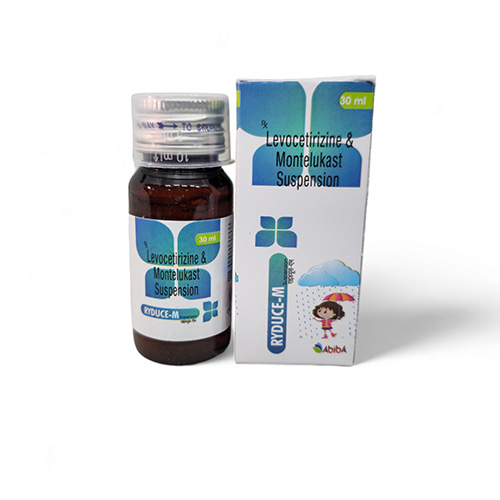
Levocetirizine and Montelukast Syrup – It is a combination medicine that belongs to the class of drugs called “H1 receptor antagonists and Leukotriene receptor antagonists.” The syrup is generally used for the treatment of allergic rhinitis, chronic idiopathic urticaria (an allergic skin reaction with red, raised, itchy bumps on the skin), and bronchial asthma in children aged between 2 and 5 years.
Allergic rhinitis, also called hay fever, is a heterogeneous disorder associated with inflammation of the inner lining of the nose, followed by nasal decongestion, repeated sneezing, wheezing, or red, watery, and itchy eyes. Store the syrup in a cool and dry place to prevent any negative effects on the medicine. Abibba Pharmaa is the leading producer and supplier of Levocetirizine and Montelukast Syrup, which is sold under the brand name Ryduce-M Syp.
Working Mechanism of Levocetirizine and Montelukast Syrup
The medicine is composed of Levocetirizine and Montelukast. Levocetirizine works by blocking the actions of histamines (a substance responsible for causing an allergic reaction) at the H1 receptors present on the surface of cells. Montelukast acts by inhibiting the action of leukotriene D4 (an inflammatory molecule causing narrowing and swelling of the airways) in the lungs, thus causing relaxation of smooth muscle.
Hence, it reduces the swelling and inflammation of the airways and leads to an eventual decrease in the onset of allergic reactions
Uses of Levocetirizine and Montelukast Sodium Syrup
Here’s the condition that Levocetirizine and Montelukast Syrup help to manage, mentioned below as follows:
- allergic rhinitis
- chronic idiopathic urticaria (allergic skin reaction with red, raised, itchy bumps on the skin)
- bronchial asthma
- perennial allergic rhinitis
- allergic asthma
Side Effects of Levocetirizine and Montelukast Sodium Syrup
Usually, there are mild to temporary side effects of Levocetirizine and Montelukast Sodium Syrup that get resolved over time. The side effects are unique for all users and depend on the individual’s health and response to the therapy. You shall immediately contact your doctor if your side effects persist or worsen with time. The list of side effects noticed on using Levocetirizine and Montelukast Sodium Syrup is mentioned below:
- Diarrhea
- Dryness in the mouth
- Fatigue
- Headache
- Sleepiness
- Vomiting
- Constipation
- Abdominal pain
- Otitis media (infection of the ear)
- Influenza
Drug Interactions
Two or more drugs, when taken together, can interact with each other and cause negative health effects. They may also react to certain food items and health conditions, causing the same negative health effects. Therefore, avoid taking the syrup with the following drugs:
- Rifampicin (used to treat tuberculosis)
- Ritonavir (a medicine used to treat viral infections)
- Theophylline (a medicine used to treat asthma)
- Gemfibrozil (used to control high blood cholesterol levels)
- Phenytoin, phenobarbital (used to treat epilepsy)
Precautions and Warnings While Taking Levocetirizine and Montelukast Syrup.
Before using Levocetirizine and Montelukast Syrup, people must disclose their past and recent health conditions to their healthcare professional.
- The syrup shall not be used by pregnant women and is only meant to be used by children.
- Do not allow your child to play outside for a longer duration, as this medicine may cause drowsiness or dizziness.
- Do not give this syrup to your child if he or she has a kidney disorder.
- Store the medicine in a cool and dry place away from direct sunlight.
- Take it as prescribed by the doctor; do not increase or decrease the dosage more than recommended.
How to Take This Syrup?
Follow the instructions:
- Take the syrup as per the prescribed dosage and duration by the doctor.
- Shake the syrup well before giving it to your children.
- Do not suddenly stop taking the syrup and complete the full course.
Frequently Asked Questions (FAQs)
Q1. What is Levocetirizine and Montelukast Sodium Syrup mainly used for?
Levocetirizine and Montelukast Sodium Syrup are commonly used to manage allergic rhinitis, reducing sneezing, runny nose, nasal congestion, and other allergy-related discomforts effectively.
Q2. How do Levocetirizine and Montelukast Sodium Syrup work in allergies?
Levocetirizine and Montelukast Sodium Syrup work by blocking histamine and leukotrienes, which are responsible for allergic symptoms like swelling, irritation, and airway sensitivity.
Q3. Can children take Levocetirizine and Montelukast Sodium Syrup safely?
Yes, Levocetirizine and Montelukast Sodium Syrup are often prescribed for children due to their syrup form, but dosage must always follow a doctor’s recommendation.
Q4. Does Levocetirizine and Montelukast Sodium Syrup cause drowsiness?
Levocetirizine and Montelukast Sodium Syrup may cause mild drowsiness in some individuals, though Levocetirizine is designed to be less sedating compared to older antihistamines.
Q5. How quickly do Levocetirizine and Montelukast Sodium Syrup start working?
Levocetirizine and Montelukast Sodium Syrup usually begins relieving symptoms within a few hours, while full improvement in allergic conditions may be noticed after consistent use.
Q6. Can Levocetirizine and Montelukast Sodium Syrup be used for cough due to allergies?
Yes, Levocetirizine and Montelukast Sodium Syrup can help reduce allergy-related cough by controlling inflammation and preventing airway irritation caused by allergens.
Q7. Is Levocetirizine and Montelukast Sodium Syrup suitable for long-term use?
Levocetirizine and Montelukast Sodium Syrup can be used for longer durations if prescribed, especially in chronic allergies, but regular medical supervision is recommended.
Q8. Can I take Levocetirizine and Montelukast Sodium Syrup with other medications?
Levocetirizine and Montelukast Sodium Syrup may interact with certain drugs, so it’s important to consult a healthcare professional before combining it with other medications.